
New London City Directory Runs
New London has a documented directory trail that begins in the nineteenth century and changes shape over time. The Public Library of New London identifies local directories beginning in 1853, and the New London County Historical Society says its reference collection also starts there. The entries are not one single, unbroken series. Some titles are city-only, some cover the county or nearby towns, and some years are bibliographic leads that should be confirmed with the holding institution before a visit or a citation.
| Collection or run | Years | Publisher or source | Where held and access |
|---|---|---|---|
| Turner's New-London City Directory | 1853-54 | Williams & Bacon | PLNL and NLCHS local-history holdings |
| New London Directory | 1859-60 | New London Publishing Co. | State historic-preservation bibliography; confirm copy location |
| Christopher Prince directory | 1865-66 | Christopher Prince | Bibliographic lead; ask PLNL or NLCHS to verify |
| New London County Directory & Business Advertiser | 1873 | County directory title | Connecticut State Library digitization and directory pathways |
| Whittlesey-related New London runs | 1887, 1890, 1893, 1895-96 | Whittlesey and related leads | Local catalogs; confirm exact volume before citing |
| Price & Lee New London volumes | 1900, 1910, 1915, 1920 | Price & Lee | State bibliography and local collections |
| Day and Price & Lee listings | 1902; 1903-06 | Day Publishing Co.; Price & Lee | FamilySearch catalog and microfilm leads |
| Regional Price & Lee volumes | 1930, 1935, 1940, 1945, 1950 | New London, Waterford, and Groton material | State bibliography; regional rather than city-only coverage |
| New London-Niantic & Waterford Directory | 1960 | Regional directory title | Confirm local holdings and coverage before use |
| Price & Lee | 1965 | Price & Lee | Documented in the state bibliography; continuation is not assumed |
The safest conclusion is a starting year of 1853 and documented later runs reaching at least 1965, not an uninterrupted run or a known final printed year. A regional title may place New London beside Waterford, Groton, Niantic, or other nearby places. Read the title page and scope statement before treating an entry as a New London city record.
The First New London City Directory Lead
Turner's 1853-54 New-London City Directory, published by Williams & Bacon, is the clearest opening point for a historical name search. It is a compact volume, so a researcher can learn the order of the pages, the spelling habits of the printer, and the shorthand used for streets and households. The 1859-60 New London Directory from the New London Publishing Co. and the 1865-66 Christopher Prince lead extend the early period, but the available research treats their physical location as something to verify rather than as a promise of a complete shelf.
The 1873 New London County Directory & Business Advertiser adds a different layer. Its title signals both resident and business use, so a name may appear in a household section, a business listing, or an advertisement. The Connecticut State Library's history and genealogy guide is a good starting point for the state archive, census, court, cemetery, probate, directory, and digital-collection paths. A page number, street spelling, and publisher name make a later request much easier to answer than a broad request for every record about a person.
New London Library Directory Shelves
The Public Library of New London is the most practical first stop for a local volume question. Its Local History & Genealogy service is at 63 Huntington Street, New London, and lists 860-447-1411 extension 5 for focused help. A Connecticut resident can submit a specific research request without a fee. An out-of-state request is $25, refundable if the library finds nothing. Unknown or unindexed questions may need an appointment in the History & Genealogy Room, and the library asks requesters to supply a known date when newspapers are involved.
The room is a controlled research space, not a drop-in scan station. A valid photo ID is copied and left at the reference desk. Large bags and food are not allowed, and permission is required before copying material. Those small rules matter when a directory, microfilm reel, or local-history file is the only surviving route to a name. The library also holds books, photographs, family genealogies, school publications, annuals, local histories, and a 1912 Sanborn reference. When a page is not online, the web request form, a focused email, mail, or an appointment with the holding institution are the practical access paths.
The Public Library of New London's local-history page shows the request route and the kinds of material staff can help identify.
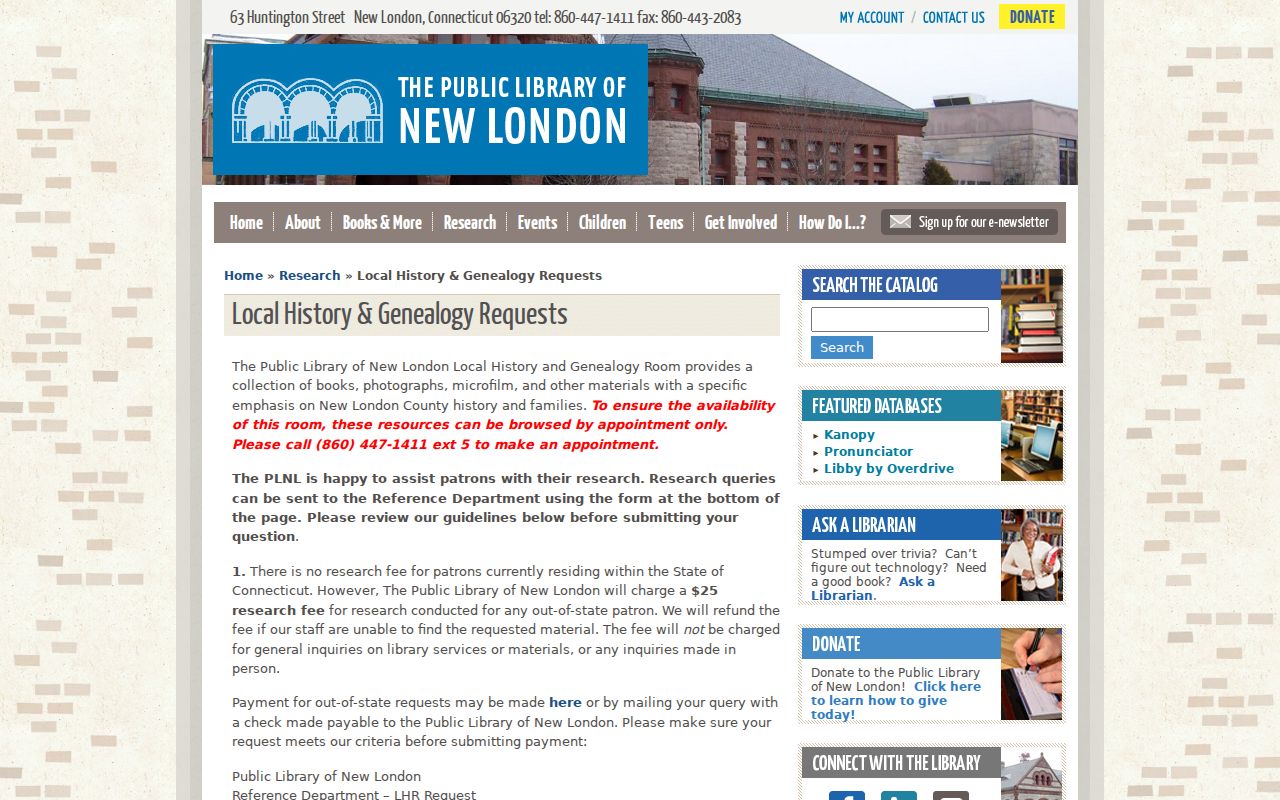
The library image belongs with the access plan: identify the likely year first, then ask a focused question that a staff member can check against a shelf, reel, or page.
New London Historical Society Directories
The New London County Historical Society adds depth that a directory shelf alone cannot provide. Its collections include local volumes from 1853, family histories, WPA headstone notebooks, early census material, wills, property and tax papers, maps that list property owners, school annuals, family Bible records, photographs, and diaries or correspondence. Its newspaper resources include a marriage and death index for 1758-1866, an early 1758 photostat, a regular newspaper series ending in 1904, and scattered later issues.
Research is by appointment at 11 Blinman Street. The society lists research@nlchs.org and 860-443-1209. A preliminary email search costs $10. Further staff work is $40 per hour, while in-person research is free by appointment. That split helps a family historian choose between a narrow question sent in advance and a longer visit with several years of directories, maps, or probate leads.
The society's genealogy holdings page is the best lead for family files and directory context.
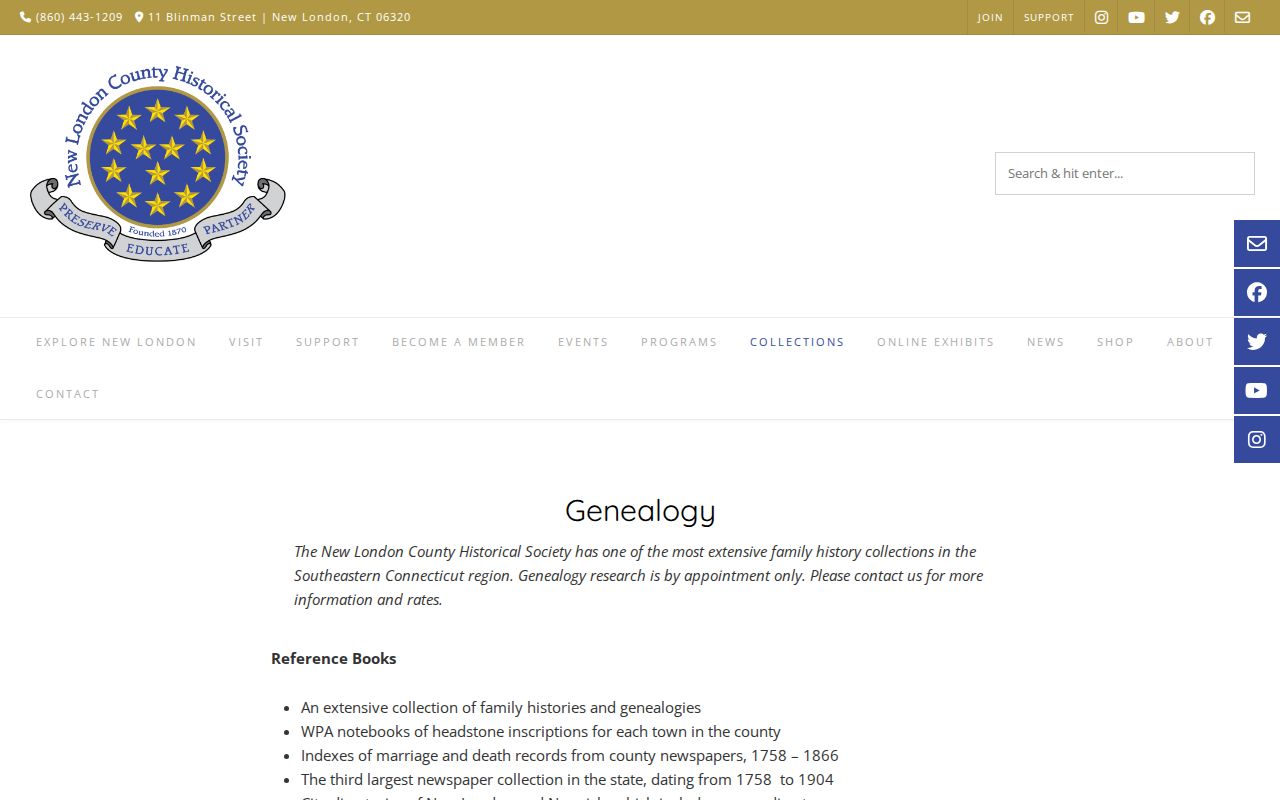
This view of the historical society materials reinforces the need to pair a printed entry with a family paper, obituary index, map, or deed rather than reading one line as a complete life story.
The broader New London County Historical Society collections page also identifies property, probate, map, newspaper, and manuscript material that can test a directory clue.
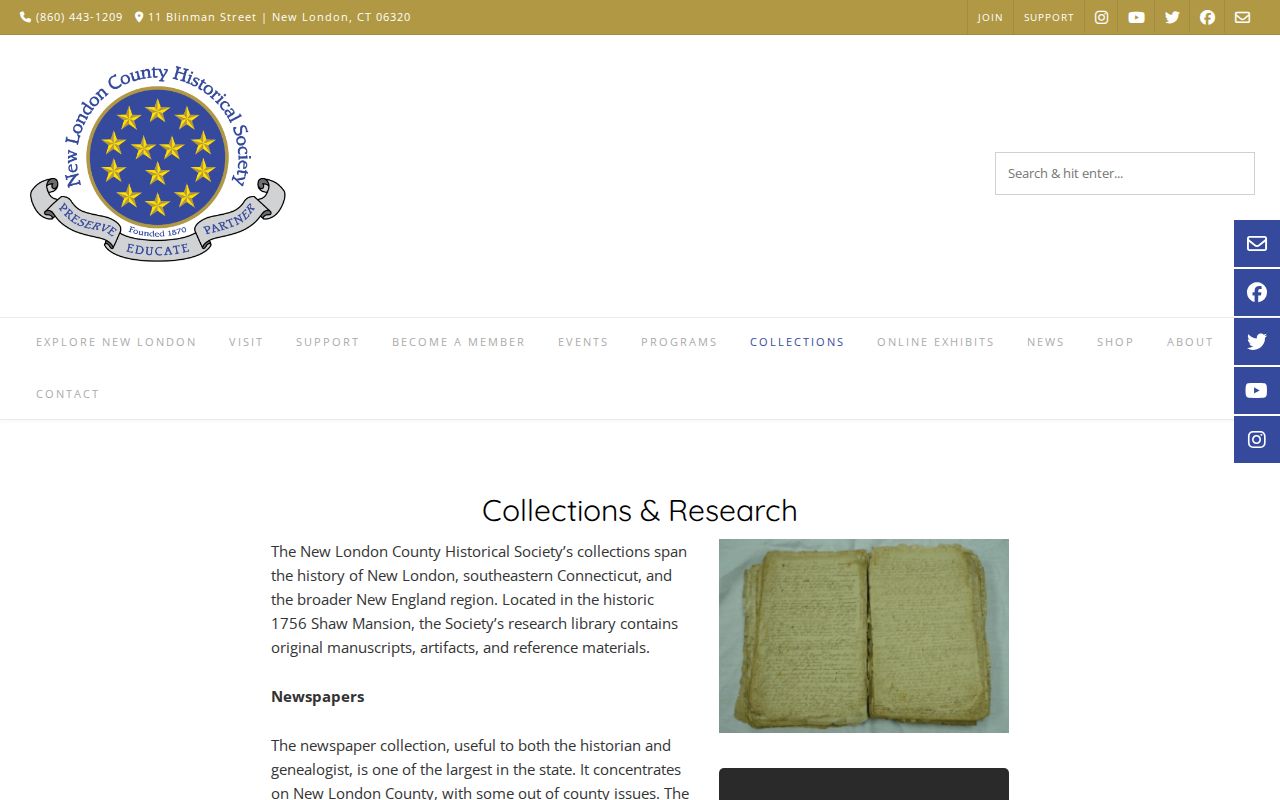
Collections context is useful when a directory year is present but the exact household question needs a different record group.
Digitized New London City Directory Paths
Online discovery is strongest when it narrows the year or title before an archive visit. The PLNL Digital Collection is a separate landing page for digitized local material, but its dynamic page does not promise that every printed directory is image-searchable. The Connecticut State Library guide points toward state archives and digital collections, including In and about New London and the 1873 county directory. A ContentDM item for a digitized New London County directory supplies a useful page-level citation.
FamilySearch adds a catalog and microfilm route. The New London vital-record catalog covers births, marriages, and deaths from 1644-1922 on seven reels and indexes most volumes, although some images need an account. That catalog is not a substitute for a printed volume, but it can confirm a date or family link after a directory supplies a name and street. The Connecticut State Library, PLNL, NLCHS, and FamilySearch therefore serve different purposes: discovery, image access, local context, and event checking.
The library's digital landing page is a sensible first click when a title has a digitization lead.
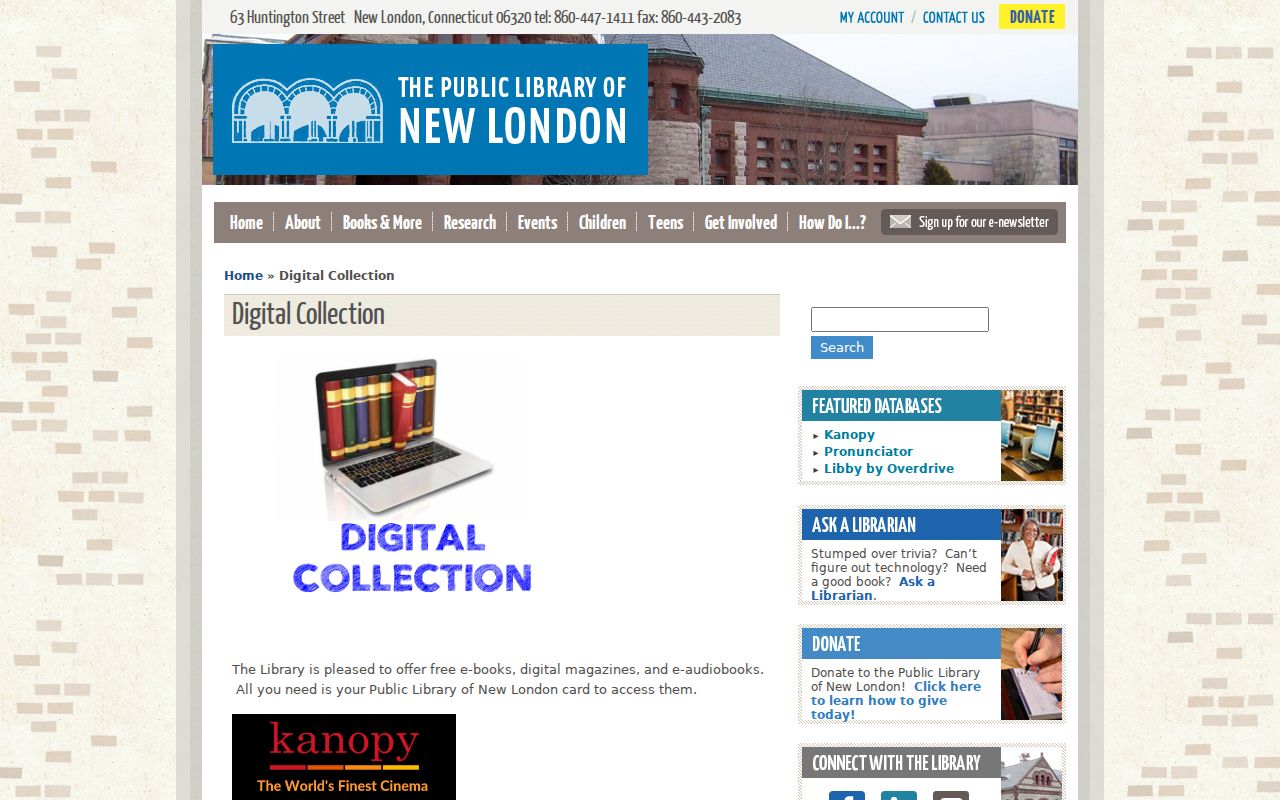
A digitized collection can reveal whether a volume is present, but the page image still needs a title, year, and location check.
The Connecticut State Library history and genealogy guide links the directory, census, court, cemetery, probate, and archive paths that fill gaps between local volumes.
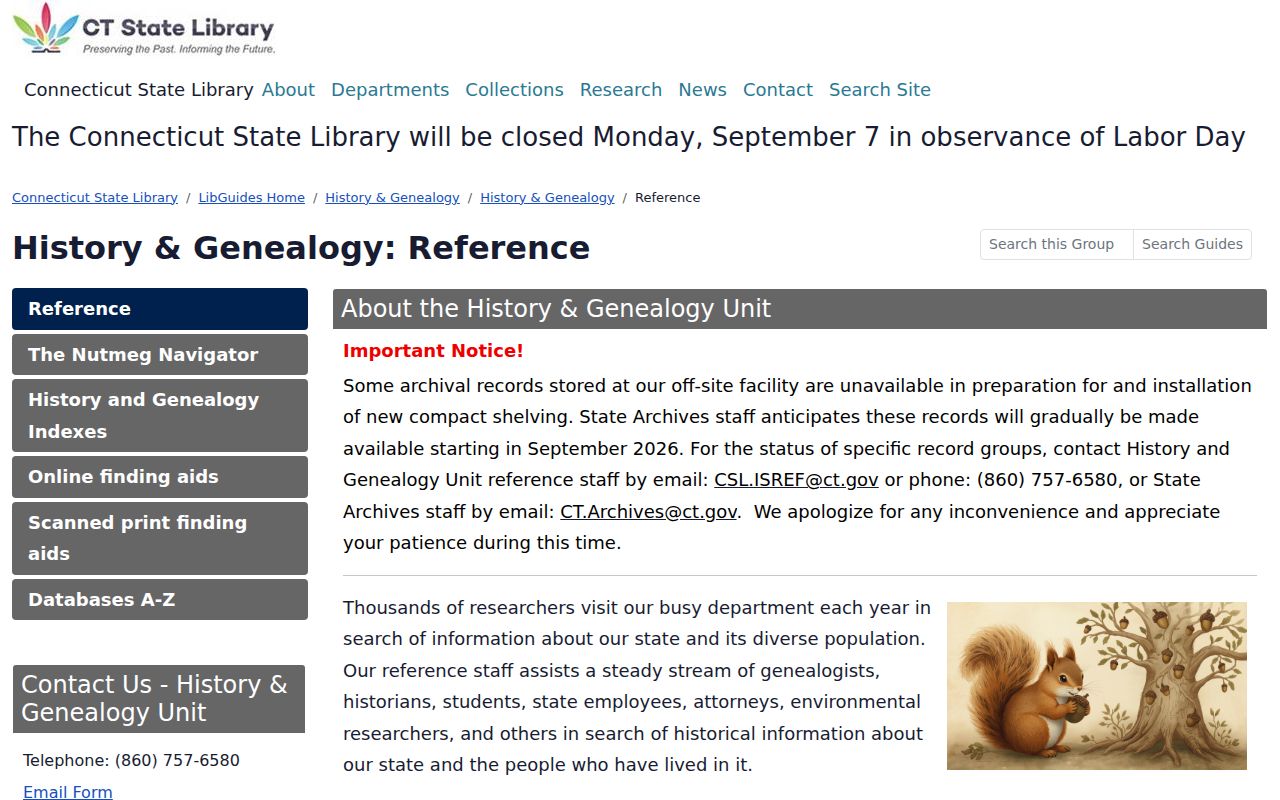
The state guide is most useful when a local shelf has a missing year or when a directory clue points toward court, probate, or cemetery records.
This digitized New London directory item can be cited as a specific online object, while its neighboring records help show how digital collections are organized.
The item is a lead to a scan and catalog record, not proof that all New London directory years share the same search tools or coverage.
Reading a New London City Directory Entry
A New London city directory entry is a compressed set of clues. Start with the surname and given name, then look for a spouse or household note, an occupation or business, the street address, and a mark that explains whether the person boards or keeps rooms. “Bds” or “boards” does not prove ownership. A widow or estate notation can point toward a death notice, probate file, deed, or a move, but it does not supply the date by itself.
| Name | Surname and given name, with initials and spelling preserved exactly as printed. |
|---|---|
| Household clue | Spouse, family, widow, estate, or other notation that needs a second source. |
| Occupation or business | A historical description that can connect a person to a shop, trade, or institutional address. |
| Street address | House number and street wording, checked against nearby years and maps. |
| Boards or rooms | “Bds” or rooming language signals an occupant clue, not an ownership claim. |
| Abbreviation key | The publisher's guide to short forms; photograph or copy it before reading entries. |
- Criss-cross directory
- An address-order or reverse arrangement that starts with a street and number, then names the person or household tied to it.
- Householder index
- A name-based section organized around heads of households or listed residents, usually separate from the street-order pages.
- Abbreviation key
- The volume's explanation of marks and short forms. Without it, “r,” “bds,” initials, and status notes can be misread.
No exact transcription of page 18 in the 1853-54 volume is safe from the available text. The William and Celinda Harris Anderson, 45-51 Shapley Street citation is a research lead from the Black Heritage Trail, not a license to invent the printed entry.
Searching New London Streets in Directory Years
Local sources do not confirm a complete dedicated reverse or criss-cross series. Ask PLNL or NLCHS whether an address-to-name or telephone directory exists for the year in hand. If it does not, scan the street pages in the volume, then compare adjacent years. Keep old street spelling, house-number changes, initials, and nearby businesses in the notes. The street itself can be more stable than a surname, but the address must still be checked against a map or deed.
For current parcel-keyed work, the New London street directory keeps the modern address chain separate from the historical shelf. That split prevents a printed occupant from being treated as a current owner and prevents a current parcel card from being read as proof of every earlier household. A directory search is strongest when its result is labeled with the year, publisher, page, and collection that supplied it.
Family History in New London City Directories
Tracing a household works best as a repeatable comparison, not as a one-year lookup. Begin with the strongest name and street combination, then use the same spelling and nearby variants across the next available volume. Compare the address, spouse note, occupation, boarder mark, and any widow or estate wording. When a person disappears, test a move, death, a new household head, an unindexed year, or a change in the book's geographic scope.
- Choose a directory year from the documented run and copy its title, publisher, page, and abbreviation key.
- Find the name, then record the exact street wording, household notes, occupation, and initials.
- Compare an adjacent available year and mark any new street, spouse, widow, estate, or boarder notation.
- Pair the directory trail with the 1900, 1910, or 1920 census when the household falls within those schedules.
- Use The Day, NLCHS indexes, a vital record, probate, deed, or map to test the reason for a change.
A directory gap is not a conclusion. Regional volumes may shift the title's geography, and a business listing may sit beside household entries without describing a home. When a historical clue needs a modern name or address check, the New London resident lookup can supply a separate verification path through current official sources.
The Day and New London Directory Clues
The complete The Day microfilm at PLNL runs from July 1881 to the present, giving a directory researcher a rare continuous local newspaper bridge. A printed entry can supply a date range, street, spouse, business, or occupation, while a newspaper notice may explain a death, move, sale, community event, or legal matter. The Public Library asks for a specific date when a newspaper request is submitted, so a directory year and a narrow event window make the request more useful.
NLCHS supplies the earlier layer. Its marriage and death index covers 1758-1866, its newspaper holdings begin with an 1758 photostat, the regular series ends in 1904, and later issues are scattered. The society's appointment route, email search, and in-person research options give a way to test a name when the printed directory only suggests a relationship. Use the newspaper or index as evidence of an event, not as a full household roster.
Research habit. Write the directory year, page, street, and exact name before requesting a newspaper search. A focused date window is more useful than a request for every notice about a family.
Maps for a New London City Directory Address
Maps test whether an old address still describes the same physical place. New London Sanborn coverage is documented for 1884, 1891, 1896, 1901, 1907, 1912, and 1921, with a 1954 republication record. The Library of Congress item for the 1891 New London map is a public-domain scan lead. A Sanborn sheet can show a building footprint, use, addition, or change in a block, but it does not name every person who lived there.
New London Landmarks provides the address bridge. Its files are organized by street address and can contain building histories, historic and current photographs, clippings, maps, drawings, and related documents. A Landmarks appointment at 49 Washington Street, 860-442-0003, can help test an old number or connect a directory street to the physical building. The map and file should be paired with the printed entry, not used as a substitute for it.
Whaling Terms in New London City Directories
New London's port history leaves a useful vocabulary in its directories. The New London County Historical Society's whaling exhibit says that by 1846 the port had more whaling ships than any port except New Bedford. It also notes that a contemporary printed directory listed shipbuilders, sailmakers, coopers, provision bakers, rope and block makers, smiths, photographers, merchants, and saloons.
Those terms can help interpret a name, business, or street, especially when a family history crosses the waterfront. They remain interest clues rather than proof of a person's residence. A directory occupation should be paired with the street entry, a newspaper notice, a map, or a deed before it is used to explain a household's place in New London.
The Historical Society's whaling exhibit supplies the local context for these occupation and business terms.